Silent technology at events: a sustainable audiovisual revolution
Silent technology is transforming event production, improving sustainability and reducing noise pollution.

A sustainable audiovisual revolution
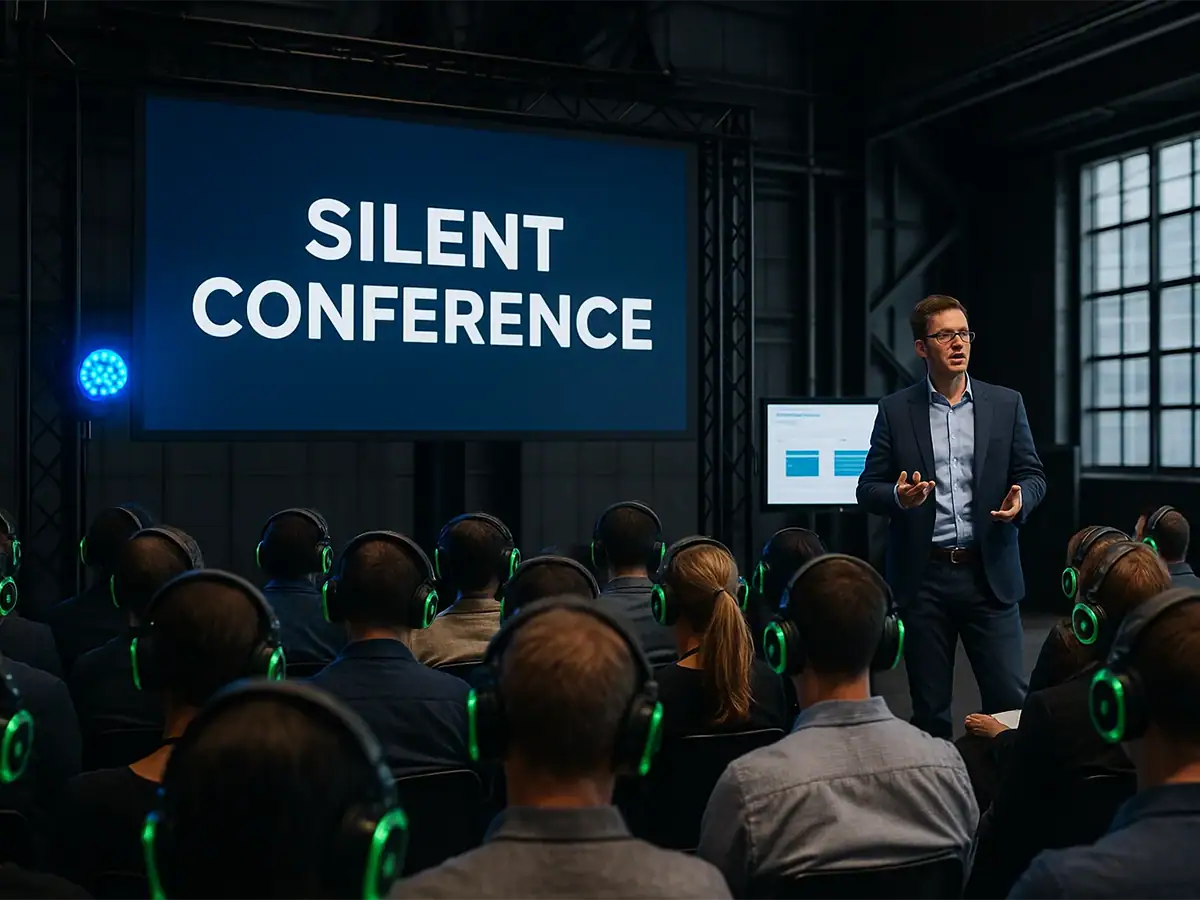
Silent technology at events has transformed sustainable audiovisual production, offering an efficient, innovative and environmentally friendly alternative. This sound solution based on wireless headphones delivers a personalised listening experience with no noise pollution and no need for traditional speakers. As a result, energy use is optimised, ambient noise is reduced and the event’s environmental commitment is strengthened.
It also gives greater technical and logistical flexibility, especially in urban, heritage or noise-sensitive settings. For all these reasons, it is becoming a key solution for events now and in the future.
Advantages of silent technology
One of the main benefits of silent events is that no noise escapes, so they can be held in places with acoustic restrictions.
The multi-channel system lets attendees choose their preferred content, increasing interaction and personalising each person’s experience.
Removing sound distractions raises attention levels, improves message retention and encourages deeper engagement with the event’s content.
How it works and technical components
A silent system consists of radio-frequency or Wi-Fi transmitters that send audio to synchronised wireless headphones, with up to three configurable channels.
The most common models use UHF bands of 863-865 MHz or 2.4 GHz Wi-Fi, ensuring clear, stable, interference-free transmission.
Headphones usually have rechargeable batteries lasting 8 to 12 hours, ergonomic headbands, isolating ear pads and individual volume and channel controls.
Leading brands and technologies
The best-known manufacturers include:
- Silent Events: pioneers in immersive experiences. Headphones with up to three channels, over 500 metres of range, 10-hour batteries and excellent sound isolation.
- Silent Disco King: UHF audio systems with a clean signal and robust equipment. Ideal for outdoor events, large festivals and shared spaces.
- Sennheiser: HD wireless headphones with professional sound, real-time transmission, low latency and a design aimed at corporate settings.
- AudioFetch: turns audio into a stream accessible from smartphones via an app. Works with existing Wi-Fi, ideal where physical headphones are not handed out.
- Listen Technologies: accessible solutions that combine captions, hearing-aid compatibility and multiple languages for inclusive events with the Listen EVERYWHERE system.
These brands offer accessories such as multi-unit charging stations, transport cases, custom labels and management software to make organisation easier.
Practical applications and use cases
Silent technology suits many kinds of events:
- Medical congresses: simultaneous talks without interference, with attendees choosing content and channel without disturbing others.
- Trade fairs and exhibitions: interactive stands with private, translated or audience-specific presentations.
- Sports events: personalised live commentary, even in several languages, without speakers flooding the venue.
- Silent discos: several DJs playing at once, with total freedom for each guest.
- Corporate events: training and meetings with channels by language, group or topic.
Sustainable impact of silent technology
Silent technology brings significant environmental benefits. Removing high-power speakers greatly reduces total energy use.
Rechargeable batteries generate less waste than disposable batteries or other more polluting systems.
And since less logistics equipment is needed (truss, cabling, speakers), transport is optimised and CO₂ emissions during set-up and get-out are reduced.
Challenges and technical considerations
The main challenges include proper audio synchronisation and the logistics of handing out, charging and collecting headphones, especially at large-scale events.
It needs advance planning, field tests and trained technical staff familiar with RF or Wi-Fi systems. Spare batteries and on-site support must also be planned.
Clear communication with attendees is also key: simple instructions, signposted collection points and accessible basic support.
The future of silent technology at events
Silent technology will keep growing through integration with mobile apps, augmented-reality experiences, real-time simultaneous interpretation and virtual assistants.
Advances in 5G connectivity, compression codecs and lighter batteries will bring longer battery life, better audio quality and lower latency.
Everything suggests it will become an essential part of sustainable events, smart cities and heritage settings where acoustic respect is a priority.
Conclusion
Silent technology is here to transform the sound experience at events. Its mix of sustainability, efficiency and innovation makes it an essential resource.
At Media Audiovisuales we promote these advanced systems as part of our commitment to more responsible, personalised and environmentally friendly audiovisual production.